



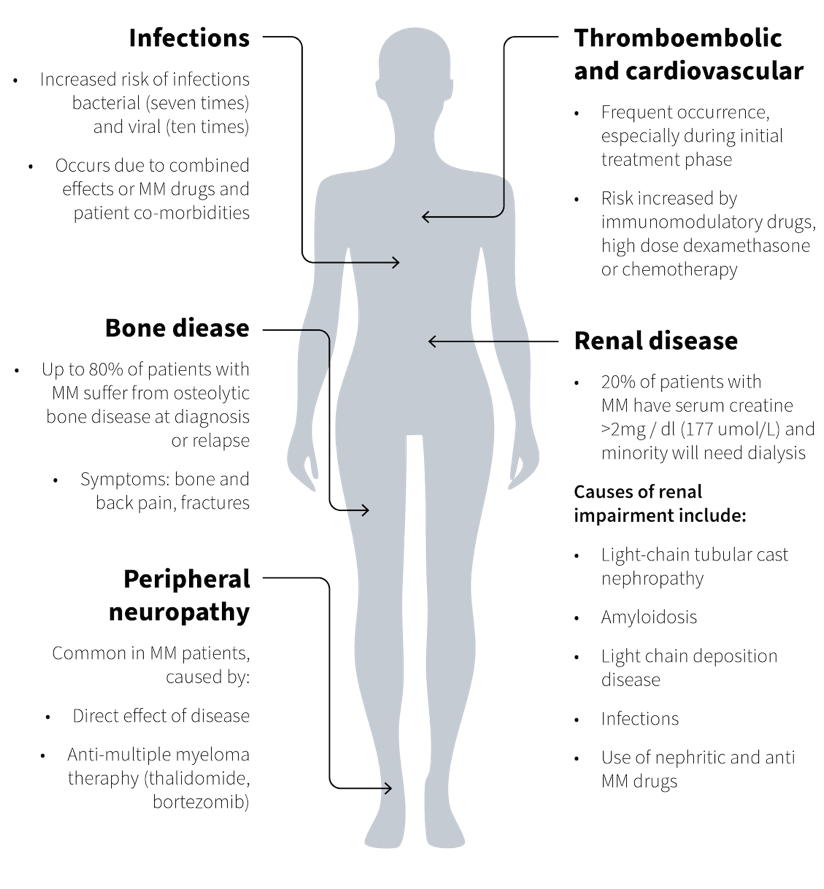
Source: IMWG 2020; CDC United States Cancer Statistics, accessed May 2020. Rosenberg PS, Barker KA, Anderson WF. Future distribution of multiple myeloma in the United States by sex, age, and race / ethnicity. Blood. 2015;125(2):410-412 ASCO (via cancer.net May 2020).
Multiple myeloma is a type of cancer that is associated with the expansion of cancerous plasma cells, a type of white blood cell found in bone marrow. Healthy plasma cells produce antibodies (also known as immunoglobulins) that help fight infections. Antibodies are a critical part of the immune system response, targeting and binding to foreign substances such as bacteria and viruses leading to their destruction by the immune system.
In multiple myeloma, a single, abnormal plasma cell (also called a myeloma clone) multiplies uncontrollably, crowding out healthy blood cells (including red blood cells, white blood cells, and platelets) and produces large amounts of an abnormal, dysfunctional antibody called M protein (monoclonal protein). The myeloma clone also produces an excess of either a free kappa or free lambda light chain, which are components of the immunoglobulin.
The increase in myeloma cells in the bone marrow and excess M proteins and free light chains in the blood can lead to various health problems. Ultimately, the patient will develop a weakened immune system, exposing them to a higher risk of serious and life-threatening infections.
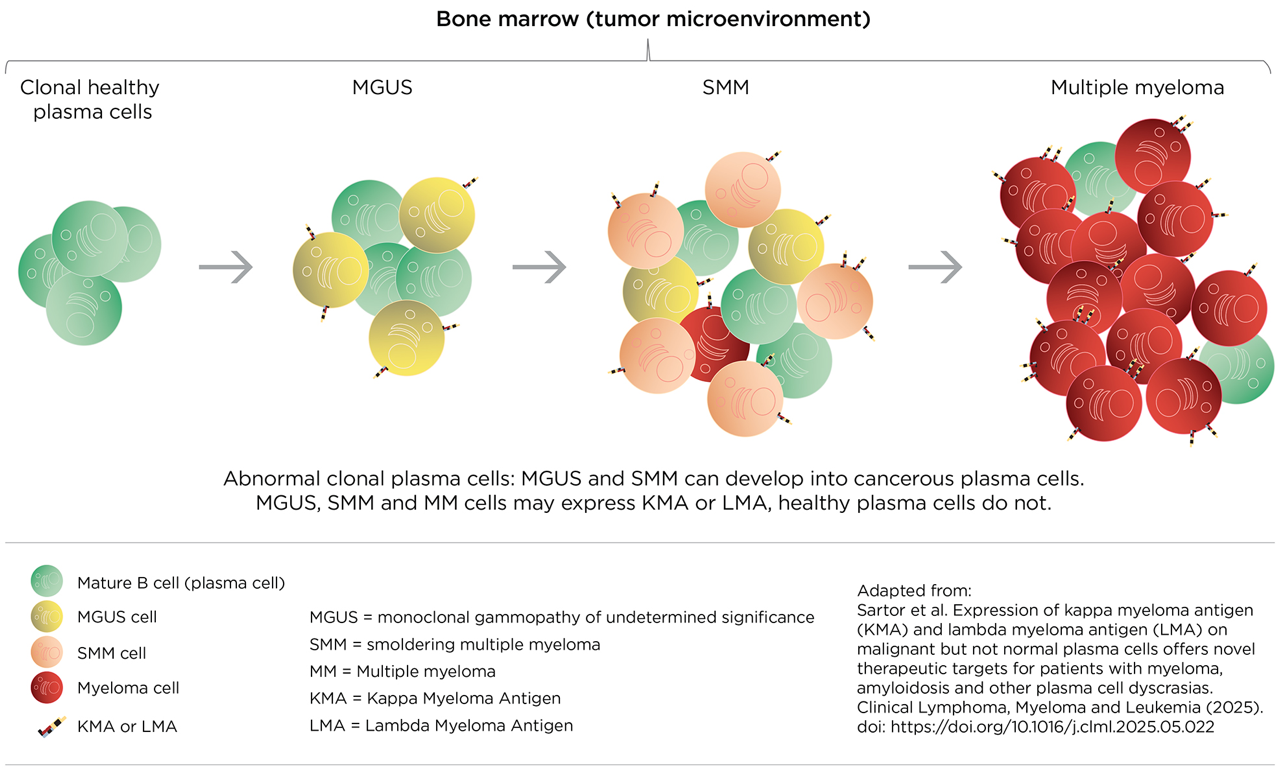
Multiple myeloma is diagnosed by a blood test, a bone marrow test, a urine test, and an imaging test. The exact cause of multiple myeloma remains unknown, but certain factors like age, family history, the pre-cancer conditions monoclonal gammopathy of undetermined significance (MGUS) and smouldering multiple myeloma (SMM) may increase the risk. Genetic abnormalities may also play a role in the development and progression of multiple myeloma. Data from the Company's pre-clinical research has shown that KMA and LMA targets are present on plasma cells in the bone marrow from the premalignant stage of disease and throughout progression to multiple myeloma disease.
There is no cure for multiple myeloma, but combination and sequenced regimens of treatments are available to manage the disease, induce remission, and improve quality of life. Current treatments follow a target-based approach, focusing on various cellular pathways and proteins to inhibit myeloma cell growth and survival. This has resulted in multiple treatment options, but no conclusive approach that delivers a “cure”.
Some 70% of multiple myeloma cases present with kappa-type multiple myeloma, whereas 30% of cases present with lambda-type multiple myeloma.
Multiple myeloma is the second most common blood cancer worldwide. In Australia, around 22,000 people are living with the disease and about 2,600 are diagnosed each year. Globally, the WHO estimates roughly 543,000 people are living with myeloma, with around 188,000 new cases and 121,400 deaths annually. Approximately 42% of patients die within five years of diagnosis.
RRMM describes myeloma that returns after responding to treatment (relapsed) or stops responding to current treatment (refractory). The disease is characterised by repeated cycles of response and relapse, with patients progressing through multiple lines of therapy. RRMM is the population in which HaemaLogiX's trials are conducted, reflecting the high unmet need once existing therapies stop working.
Standard of care typically combines drug classes: immunomodulatory drugs (lenalidomide, pomalidomide), proteasome inhibitors (bortezomib, carfilzomib), monoclonal antibodies (such as daratumumab) and dexamethasone. Autologous stem cell transplant remains important for eligible patients. In later lines, bispecific T-cell engagers, antibody-drug conjugates and BCMA-directed CAR-T are increasingly used. Myeloma is currently treatable but not curable.
AL (light chain) amyloidosis is a rare disease in which abnormal plasma cells produce misfolded light chains that deposit in tissues as amyloid fibrils, progressively damaging organs such as the heart and kidneys. It shares its underlying biology with multiple myeloma — both arise from clonal plasma cells — and because these cells express KMA or LMA, HaemaLogiX's antigen-directed approach is of potential relevance.